Spanish Omelet
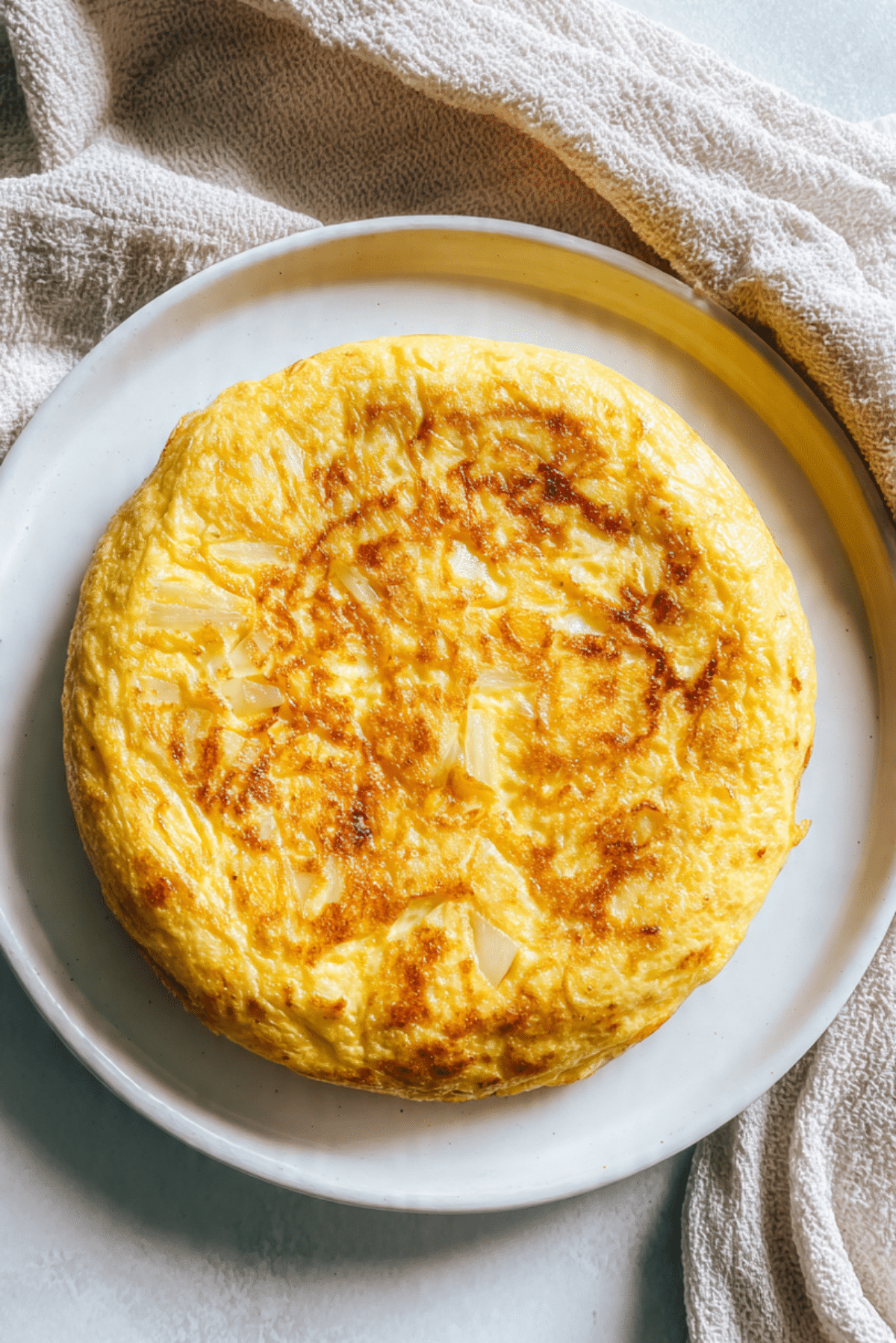
There is something beautifully simple about a Spanish Omelet. Just a handful of humble ingredients, slowly cooked with care, turning into something rich, comforting, and deeply satisfying. When you slice into that thick golden round and see the tender potatoes layered inside, it feels like pure kitchen magic. Trust me, you’re going to love this. It is cozy, hearty, and surprisingly elegant all at once.
Why This Classic Never Goes Out of Style
Some recipes stick around for generations for a reason. This one is built on patience and balance. Creamy potatoes, sweet softened onions, and silky eggs come together in a way that feels both rustic and refined. It works for breakfast, lunch, or dinner. You can serve it warm, room temperature, or even chilled. Let me tell you, it is worth every bite.
A Taste of Spain in Every Slice
Known in Spain as Tortilla Española, this iconic dish is a staple in homes and tapas bars across the country. It is traditionally made with eggs, potatoes, olive oil, and sometimes onions. In Spain, you will find passionate debates about whether onions belong in it. Many families guard their version closely. What makes it special is the slow cooking of the potatoes in olive oil, which gives the omelet its tender, almost creamy texture.
Why You Can Always Count on This Recipe
Before we dive into cooking, here is why this recipe deserves a permanent place in your rotation.
Versatile: Perfect for breakfast, brunch, lunch, or as part of a tapas spread.
Budget-Friendly: Made from affordable pantry staples.
Quick and Easy: Simple ingredients with straightforward steps.
Customizable: Add herbs or vegetables to make it your own.
Crowd-Pleasing: Mild, comforting flavors that appeal to everyone.
Make-Ahead Friendly: Tastes wonderful even at room temperature.
Great for Leftovers: Slices beautifully and stores well.
Expert Tips for the Perfect Texture
A Spanish Omelet is simple, but technique matters.
- Slice the potatoes thinly and evenly for consistent cooking.
- Cook the potatoes gently in olive oil, do not rush this step.
- Allow the egg mixture to rest briefly before cooking.
- Shake the pan gently to prevent sticking.
- Flip confidently using a plate slightly larger than the pan.
Essential Kitchen Tools You Will Need
You do not need fancy equipment, just a few basics.
Nonstick Skillet: Helps achieve a smooth, even surface.
Sharp Knife: For thin, even potato slices.
Mixing Bowl: To combine the eggs and cooked vegetables.
Spatula: For shaping the omelet edges.
Large Plate: Essential for flipping the omelet safely.
Ingredients You Will Need For This Traditional Dish
Each ingredient plays a simple yet important role.
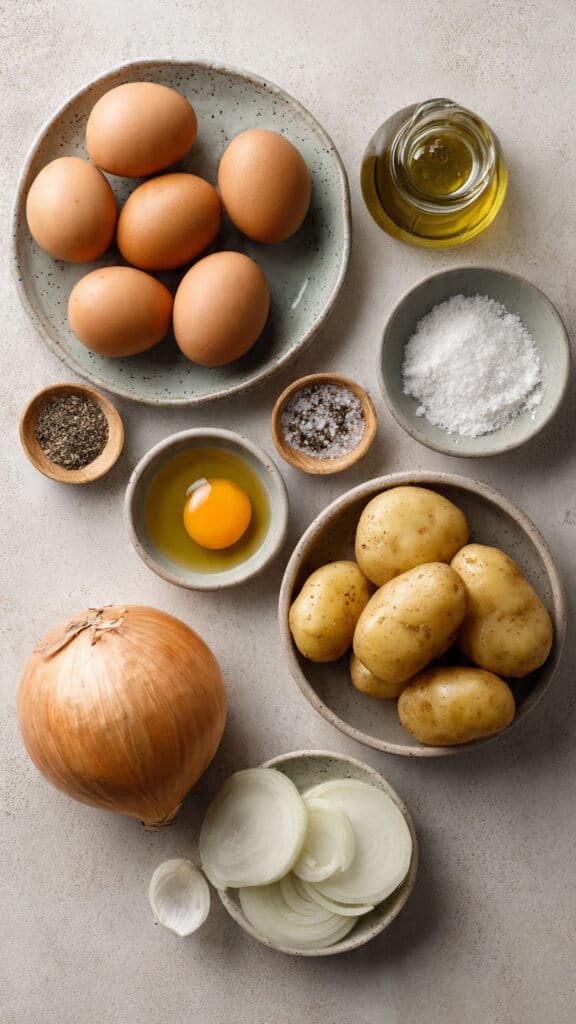
- Eggs: 6 large. The base that binds everything together.
- Potatoes: 500 grams, peeled and thinly sliced. Provide heartiness and texture.
- Onion: 1 medium, thinly sliced. Adds sweetness and depth.
- Olive Oil: 1/2 cup. Used to gently cook the potatoes and enhance flavor.
- Salt: 1 teaspoon. Brings balance to the dish.
- Black Pepper: 1/2 teaspoon. Adds subtle warmth.
Flexible Ingredient Substitutions
You can adjust slightly while respecting tradition.
Onion: Omit if you prefer a more traditional onion free version.
Olive Oil: Use light olive oil if you want a milder flavor.
Black Pepper: Add a pinch of smoked paprika for variation.
The Ingredients That Truly Define It
Some elements cannot be rushed.
Potatoes: They must be cooked slowly to become tender without browning too much.
Eggs: Fresh eggs give the omelet a rich, custardy finish.
Let’s Start Cooking
And now let’s dive into the process. Take your time with it, this dish rewards patience.
- Preheat Your Equipment: Place a nonstick skillet over medium low heat and add the olive oil.
- Combine Ingredients: Add the sliced potatoes and onions to the oil. Cook gently for about 15 to 20 minutes, stirring occasionally, until soft but not browned. Season with salt and black pepper.
- Prepare Your Cooking Vessel: In a large bowl, beat the eggs. Drain the potatoes and onions from excess oil, then gently fold them into the beaten eggs. Let the mixture sit for 5 minutes.
- Assemble the Dish: Pour the mixture back into the skillet over medium low heat. Spread evenly and cook for about 5 to 7 minutes until the bottom is set.
- Cook to Perfection: Place a large plate over the skillet and carefully flip the omelet onto the plate. Slide it back into the pan to cook the other side for another 4 to 5 minutes.
- Finishing Touches: Cook until the center is set but still slightly tender. Adjust cooking time depending on how soft you prefer the center.
- Serve and Enjoy: Let it rest for a few minutes before slicing. Serve warm or at room temperature.
The Texture and Flavor Experience
The outside is lightly golden and firm, while the inside remains tender and creamy. The potatoes almost melt into the eggs, creating a soft layered texture. The onion brings gentle sweetness, and the olive oil adds richness without heaviness. It is simple, comforting, and deeply satisfying.
Helpful Cooking Tips and Tricks
A few extra notes can help perfect your results.
- Use medium low heat to prevent over browning.
- Do not overcrowd the pan with too many potatoes.
- Allow the omelet to rest before slicing.
- Use a confident motion when flipping.
What to Avoid for Best Results
Even a simple dish benefits from attention.
- Cooking on high heat can brown the outside too quickly.
- Skipping the draining step may make the omelet greasy.
- Cutting potatoes too thick can result in uneven texture.
- Flipping too early can cause it to break.
Nutrition Facts Overview
Servings: 6
Calories per serving: 280
Note: These values are approximate.
Preparation Time Breakdown
Prep Time: 15 minutes
Cook Time: 30 minutes
Total Time: 45 minutes
Make Ahead and Storage Tips
This dish stores beautifully. Keep it in an airtight container in the refrigerator for up to three days. It can be enjoyed cold or gently reheated in a skillet. Avoid microwaving too long, as it can dry out the texture.
How to Serve This Classic Dish
Serve in thick wedges with a simple green salad, crusty bread, or as part of a tapas spread. It pairs wonderfully with fresh tomatoes and olives for a Mediterranean style plate.
Creative Leftover Transformations
Leftover slices can be tucked into sandwiches or diced and added to breakfast wraps. You can also cube it and serve as part of a brunch platter.
Additional Tips for Success
Use good quality olive oil, it truly makes a difference. Allow the potatoes to soften fully before combining with eggs. Patience is key here.
Make It a Showstopper
Serve the omelet whole on a round platter and slice at the table for dramatic effect. Garnish lightly with fresh parsley for a pop of color.
Variations to Try
- Add chopped spinach for extra freshness.
- Include diced red bell pepper for sweetness.
- Sprinkle fresh herbs into the egg mixture.
- Add a pinch of chili flakes for gentle heat.
- Use sweet potatoes for a slightly different flavor profile.
FAQ’s
1. Can I make it without onion?
Yes, many traditional versions skip the onion.
2. How do I know when it is done?
The center should be set but slightly tender.
3. Can I bake it instead?
Yes, you can finish it in the oven if preferred.
4. Why is mine sticking?
Make sure to use enough oil and a good nonstick pan.
5. Can I use less oil?
You can reduce slightly, but it may affect texture.
6. Can I serve it cold?
Yes, it is delicious at room temperature or chilled.
7. What potatoes work best?
Waxy potatoes hold their shape well.
8. Can I double the recipe?
Yes, use a larger skillet to maintain thickness.
9. How long does it last?
Up to three days in the refrigerator.
10. Can I freeze it?
Freezing is not recommended, as texture may change.
Conclusion
There is something incredibly comforting about a dish that relies on simplicity and technique. The Spanish Omelet proves that a few quality ingredients, treated with care, can create something truly special. Once you master this classic, you will find yourself making it again and again. It is humble, hearty, and absolutely timeless.
Print
Spanish Omelet
- Prep Time: 15 minutes
- Cook Time: 30 minutes
- Total Time: 45 minutes
- Yield: 6 servings
- Category: Main Course
- Method: Stovetop
- Cuisine: Spanish
- Diet: Vegetarian
Description
A traditional Spanish Omelet made with tender slow cooked potatoes, sweet onions, and fluffy eggs, gently cooked until golden on the outside and creamy in the center. Simple ingredients come together to create a comforting and timeless classic.
Ingredients
- 6 large eggs
- 500 grams potatoes, peeled and thinly sliced
- 1 medium onion, thinly sliced
- 1/2 cup olive oil
- 1 teaspoon salt
- 1/2 teaspoon black pepper
Instructions
- Place a nonstick skillet over medium low heat and add the olive oil.
- Add the thinly sliced potatoes and onion to the skillet. Cook gently for 15 to 20 minutes, stirring occasionally, until the potatoes are soft but not browned. Season with salt and black pepper.
- In a large bowl, beat the eggs until well combined.
- Drain the potatoes and onions from excess oil, then gently fold them into the beaten eggs. Let the mixture rest for 5 minutes.
- Return the skillet to medium low heat and pour the egg and potato mixture into the pan. Spread evenly and cook for 5 to 7 minutes until the bottom is set.
- Place a large plate over the skillet and carefully flip the omelet onto the plate.
- Slide the omelet back into the skillet to cook the other side for 4 to 5 minutes until fully set but still slightly tender in the center.
- Remove from heat and allow to rest for a few minutes before slicing and serving.
Notes
- Cook the potatoes slowly to achieve a tender, creamy texture.
- Use medium low heat to prevent over browning.
- Let the omelet rest before slicing for cleaner cuts.
- Serve warm or at room temperature for best flavor.
Nutrition
- Serving Size: 1 slice
- Calories: 280
- Sugar: 2g
- Sodium: 360mg
- Fat: 20g
- Saturated Fat: 3g
- Unsaturated Fat: 15g
- Trans Fat: 0g
- Carbohydrates: 18g
- Fiber: 2g
- Protein: 8g
- Cholesterol: 185mg