Kuku Sabzi – Persian Herb Frittata
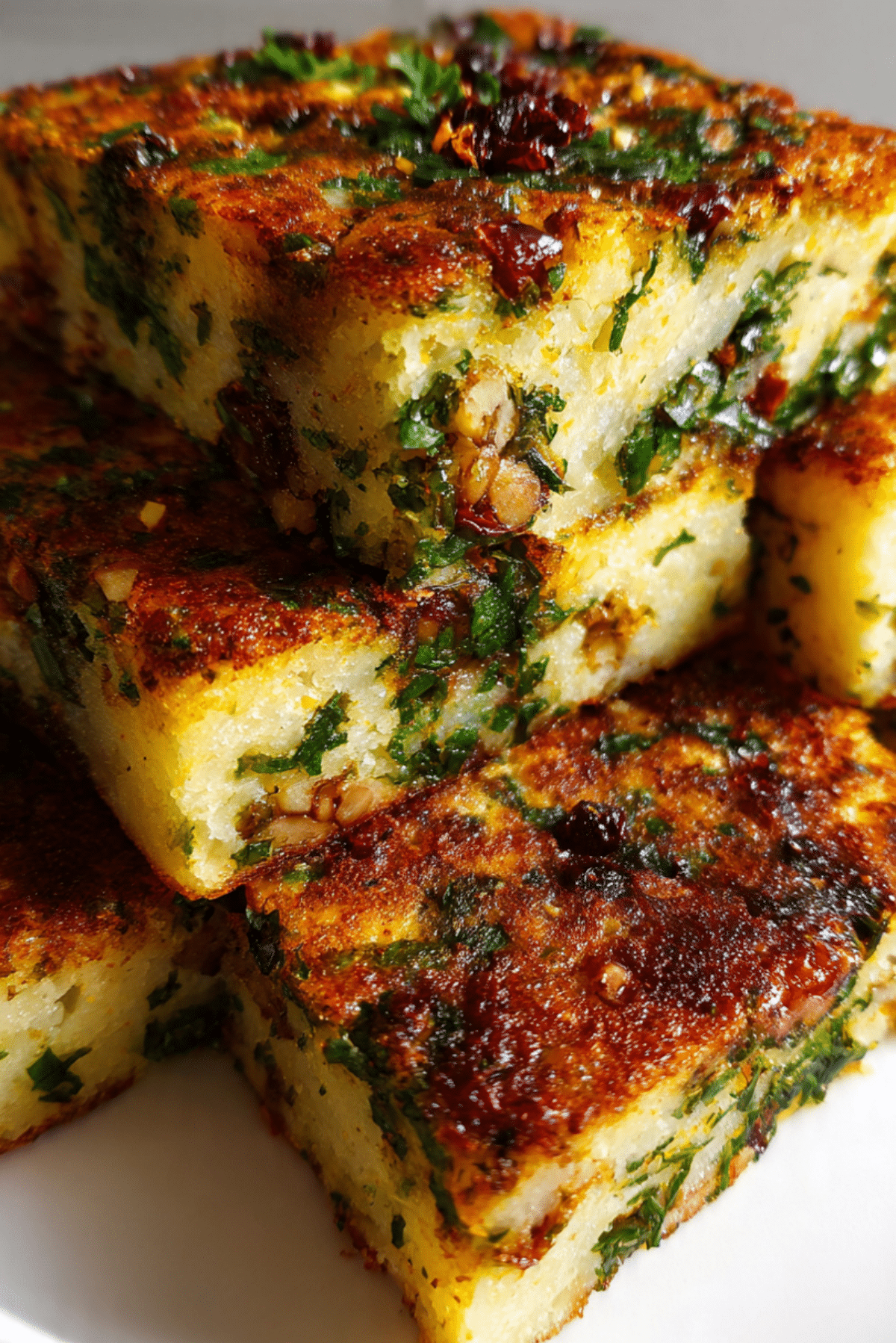
There’s something magical about the first bite of kuku sabzi. It’s vibrant, aromatic, and deeply satisfying, like a warm hug from Persian cuisine itself. This frittata-like dish is loaded with fresh herbs, crunchy walnuts, and tangy barberries that bring an irresistible texture and flavor. Whether you’re making it for Nowruz, serving it at brunch, or just craving a healthy, herb-packed meal, kuku sabzi never disappoints.
Behind the Recipe
Growing up, kuku sabzi was one of those recipes that instantly made the kitchen smell like a celebration. I remember my grandmother standing at the stove, folding mountains of herbs into fluffy eggs with such care and joy. She believed this dish was about more than flavor. It was about bringing good fortune and fresh beginnings. Every slice was like a taste of tradition wrapped in green.
Recipe Origin or Trivia
Kuku sabzi is a beloved dish in Persian cooking, traditionally served during Nowruz, the Persian New Year. Its vibrant green color symbolizes renewal and rebirth. Unlike Italian frittatas or French omelets, kuku sabzi is heavier on herbs than eggs, creating a uniquely dense and fragrant texture. While recipes vary slightly by region and family, the heart of the dish remains the same—fresh herbs, a few spices, and love.
Why You’ll Love Kuku Sabzi – Persian Herb Frittata
There’s so much to love about this green goodness. Let’s break it down:
Versatile: Serve it warm or cold, as a main dish or side, at breakfast, lunch, or dinner.
Budget-Friendly: Made with everyday ingredients like herbs, eggs, and spices.
Quick and Easy: A simple mixture and quick pan-fry make this a no-fuss favorite.
Customizable: Swap herbs, add spices, or throw in a handful of cheese if you’d like.
Crowd-Pleasing: Its rich flavor and vibrant color make it a stunning party dish.
Make-Ahead Friendly: Tastes even better the next day, making prep easy.
Great for Leftovers: Reheat for breakfast or pack it for lunch—it keeps beautifully.
Chef’s Pro Tips for Perfect Results
Getting kuku sabzi just right is all about the details. Here are my go-to secrets:
- Use fresh herbs: It’s the star of the show, so don’t skimp or go dried.
- Finely chop the greens: This helps them cook evenly and gives a cohesive texture.
- Don’t overbeat the eggs: Whisk just enough to combine so the frittata stays tender.
- Preheat the pan well: This ensures a crisp, golden crust on the bottom.
- Let it rest before slicing: The flavors settle, and the texture firms up nicely.
Kitchen Tools You’ll Need
Before we start cooking, here’s what you’ll need on hand:
Mixing bowls: For combining herbs, eggs, and spices.
Chef’s knife: Essential for chopping all those herbs finely.
Cutting board: Choose a large one to manage all your greens.
Skillet (nonstick or cast iron): To cook your kuku evenly and give it that golden crust.
Spatula: Helps flip or remove slices cleanly.
Ingredients in Kuku Sabzi – Persian Herb Frittata
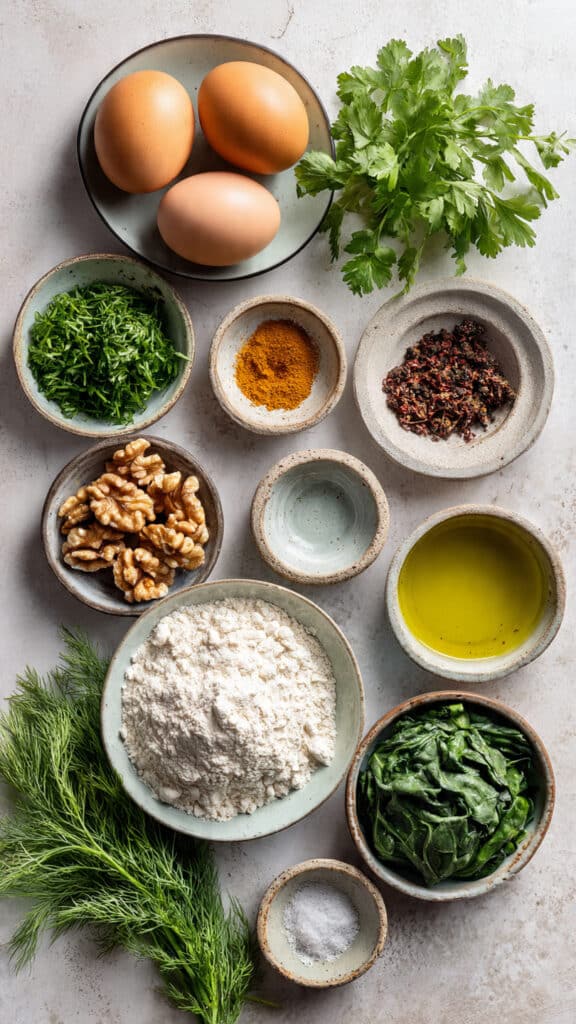
This dish is a fresh celebration of greens, nuts, and delicate spices. Every ingredient plays a role in the magic.
- Eggs: 4 large eggs – Acts as the binder that holds the herbs together into a frittata-like structure.
- Fresh parsley: 1 cup – Adds a bright, grassy flavor and lots of volume.
- Fresh cilantro: 1 cup – Brings a citrusy depth that balances the other herbs.
- Fresh dill: 1 cup – Offers a light, licorice-like flavor that enhances the aroma.
- Fresh spinach: 1 cup – Adds heartiness and a mild earthy touch.
- Scallions (green onions): 1 cup (approx. 4) – Delivers a mellow onion bite and extra freshness.
- Walnuts: ⅓ cup – Adds a delightful crunch and nutty richness.
- Dried fenugreek (optional): 1 tablespoon – Introduces a slightly bitter, deeply aromatic note.
- Barberries (optional): ¼ cup – Tiny bursts of tart flavor that contrast beautifully with the herbs.
- All-purpose flour: 1 tablespoon – Helps absorb moisture and bind the mixture.
- Turmeric powder: ½ teaspoon – Gives a warm, earthy tone and lovely color.
- Baking powder: 1 teaspoon – Provides a subtle lift for a fluffier texture.
- Extra virgin olive oil: 3 tablespoons – For richness and to prevent sticking.
- Salt and black pepper: To taste – Essential for seasoning.
Ingredient Substitutions
It’s easy to adapt kuku sabzi with what you have:
Cilantro: Flat-leaf parsley if you’re not a fan.
Barberries: Dried cranberries or currants for a similar tart bite.
Walnuts: Chopped almonds or pecans work well too.
Spinach: Kale or Swiss chard, finely chopped.
Dried fenugreek: Skip or use a pinch of celery seeds for a different earthy note.
Ingredient Spotlight
Barberries: These tiny ruby-red jewels are tart and slightly sweet, adding a pop of brightness that lifts the entire dish.
Dill: Fresh dill brings a soft anise flavor that layers beautifully with parsley and cilantro, giving kuku its signature fragrance.
Instructions for Making Kuku Sabzi – Persian Herb Frittata
Ready to cook something special? Here are the steps you’re going to follow:
1. Preheat Your Equipment:
Heat a nonstick or cast iron skillet over medium heat and add a tablespoon of olive oil. Preheat your oven to 350°F if you plan to finish it in the oven.
2. Combine Ingredients:
In a large bowl, whisk the eggs with salt, pepper, turmeric, flour, and baking powder. Fold in the chopped herbs, scallions, walnuts, barberries, and fenugreek if using. Mix until well combined.
3. Prepare Your Cooking Vessel:
Add the remaining olive oil to the hot skillet, swirling to coat the bottom evenly.
4. Assemble the Dish:
Pour the herb mixture into the skillet, spreading it evenly with a spatula.
5. Cook to Perfection:
Cook over medium-low heat for about 8–10 minutes until the bottom is golden and set. Then either flip carefully to cook the other side or transfer the skillet to the oven for 10–15 minutes until fully set.
6. Finishing Touches:
Let the kuku cool slightly in the pan. Then gently slide it onto a cutting board and slice into wedges or squares.
7. Serve and Enjoy:
Serve warm, at room temperature, or even chilled with a side of yogurt or flatbread.
Texture & Flavor Secrets
The magic of kuku sabzi lies in its contrasts. The crispy outer crust gives way to a moist, tender inside. The herbs create an earthy aroma and intense green color. Walnuts bring crunch, while barberries surprise you with bright pops of tartness. It’s savory, slightly sweet, and deeply comforting all in one bite.
Cooking Tips & Tricks
Here’s how to take your kuku to the next level:
- Use a food processor to chop herbs faster and more evenly.
- Don’t rush the cook time—low heat builds a better crust.
- Press the mixture down gently in the skillet for even cooking.
- Let it rest before cutting to avoid crumbling.
What to Avoid
Mistakes happen, but here’s how to dodge the most common ones:
- Overcooking: This can dry it out and mute the fresh herb flavor.
- Using too few herbs: The eggs are just a binder, not the star.
- Skipping oil: A dry pan will ruin that golden crust.
Nutrition Facts
Servings: 6
Calories per serving: 180
Note: These are approximate values.
Preparation Time
Prep Time: 15 minutes
Cook Time: 20 minutes
Total Time: 35 minutes
Make-Ahead and Storage Tips
Kuku sabzi is a dream when it comes to prepping ahead. You can chop the herbs a day early and store them in the fridge. Once cooked, leftovers keep well in an airtight container in the fridge for up to 4 days. To freeze, wrap slices tightly and freeze for up to 1 month. Reheat in a toaster oven or skillet until warmed through.
How to Serve Kuku Sabzi – Persian Herb Frittata
There’s no wrong way to serve kuku sabzi. Try it with flatbread and a dollop of thick yogurt, alongside rice and salad for dinner, or tucked into a sandwich with pickles. It even shines as part of a mezze spread or brunch table.
Creative Leftover Transformations
Leftover kuku is a canvas for creativity:
- Kuku Wrap: Roll slices in lavash with pickled veggies.
- Herby Breakfast Sandwich: Layer between toasted bread with cheese.
- Savory Croutons: Cube and toast pieces for a salad topping.
- Kuku Rice Bowl: Serve over rice with lemon and tahini sauce.
Additional Tips
A few more ways to boost the flavor and ease:
- Add a pinch of saffron for warmth and depth.
- Mix in a bit of feta or goat cheese for creaminess.
- Use parchment in the skillet for easier flipping and cleanup.
Make It a Showstopper
Want to impress your guests? Garnish your kuku with a sprinkle of pomegranate seeds or extra barberries. Serve it in slices on a rustic board with yogurt sauce drizzled around the edges. A few sprigs of fresh herbs on top add that final flourish.
Variations to Try
- Cheesy Kuku: Add grated mozzarella or feta to the egg mix.
- Kuku Muffins: Bake the mixture in muffin tins for individual portions.
- Spicy Kuku: Stir in minced chili or red pepper flakes.
- Kuku with Potatoes: Add grated cooked potato for a denser texture.
- Vegan Kuku: Use a chickpea flour batter instead of eggs.
FAQ’s
Q1: Can I make kuku sabzi without barberries?
Yes, you can skip them or substitute with cranberries or currants for that tangy bite.
Q2: Do I need to use all the herbs listed?
Not necessarily. Use what you have, but aim for at least three types for depth of flavor.
Q3: Can I bake kuku entirely in the oven?
Absolutely. Just transfer the mixture to a greased baking dish and bake at 350°F for 25–30 minutes.
Q4: Is kuku sabzi gluten free?
You can make it gluten free by using chickpea flour instead of all-purpose flour.
Q5: How do I reheat leftovers?
Warm slices in a skillet over low heat or in a toaster oven for the best texture.
Q6: What kind of pan is best?
A well-oiled cast iron or nonstick skillet works best for that perfect crust.
Q7: Can I freeze kuku sabzi?
Yes, let it cool completely, slice, wrap well, and freeze. Reheat from frozen in the oven.
Q8: What does kuku sabzi taste like?
Fresh, herby, earthy, with subtle spice and little pops of nutty crunch and tang.
Q9: How thick should it be?
About 1 inch thick is ideal. It should be dense but not heavy.
Q10: Can I make this dairy-free?
It’s naturally dairy-free unless you choose to add cheese.
Conclusion
Kuku sabzi is one of those rare dishes that manages to feel both comforting and exciting all at once. It brings people together around the table with its stunning color, bold flavors, and rich traditions. Trust me, you’re going to love this. So gather your herbs, crack those eggs, and let the aroma of Persia fill your kitchen.
Print
Kuku Sabzi – Persian Herb Frittata
- Prep Time: 15 minutes
- Cook Time: 20 minutes
- Total Time: 35 minutes
- Yield: 6 servings
- Category: Main Dish
- Method: Pan-Fried or Baked
- Cuisine: Persian
- Diet: Vegetarian
Description
Kuku Sabzi is a traditional Persian herb frittata packed with fresh greens, walnuts, and aromatic spices. Perfect for brunch, lunch, or as a festive appetizer, this dish is fluffy, vibrant, and rich in flavor.
Ingredients
- 4 large eggs
- 1 cup fresh parsley leaves, including tender stems
- 1 cup fresh cilantro, including tender stems
- 1 cup fresh dill
- 1 cup fresh spinach
- 1 cup scallions (approx. 4), chopped
- 1/3 cup walnuts, chopped
- 1 tablespoon dried fenugreek (optional)
- 1/4 cup barberries (optional)
- 1 tablespoon all-purpose flour
- 1/2 teaspoon turmeric powder
- 1 teaspoon baking powder
- 3 tablespoons extra virgin olive oil
- Salt and black pepper, to taste
Instructions
- Preheat a skillet over medium heat and add 1 tablespoon of olive oil. If finishing in the oven, preheat to 350°F.
- In a large bowl, whisk together eggs, salt, pepper, turmeric, flour, and baking powder.
- Fold in the chopped parsley, cilantro, dill, spinach, scallions, walnuts, barberries, and fenugreek if using.
- Coat the hot skillet with remaining olive oil and pour in the mixture, spreading evenly with a spatula.
- Cook over medium-low heat for 8–10 minutes until the bottom is golden and set.
- Flip carefully or transfer the skillet to the oven and bake for 10–15 minutes until cooked through.
- Let it cool slightly, then transfer to a board and slice.
- Serve warm or at room temperature with yogurt or flatbread.
Notes
- Chop herbs finely for a smoother texture and even cooking.
- Use a food processor for quicker prep.
- Let the kuku rest before slicing for better structure.
- Can be served warm or cold, and makes excellent leftovers.
Nutrition
- Serving Size: 1 slice
- Calories: 180
- Sugar: 1g
- Sodium: 180mg
- Fat: 14g
- Saturated Fat: 2g
- Unsaturated Fat: 11g
- Trans Fat: 0g
- Carbohydrates: 5g
- Fiber: 2g
- Protein: 6g
- Cholesterol: 140mg