Caramelized Onions
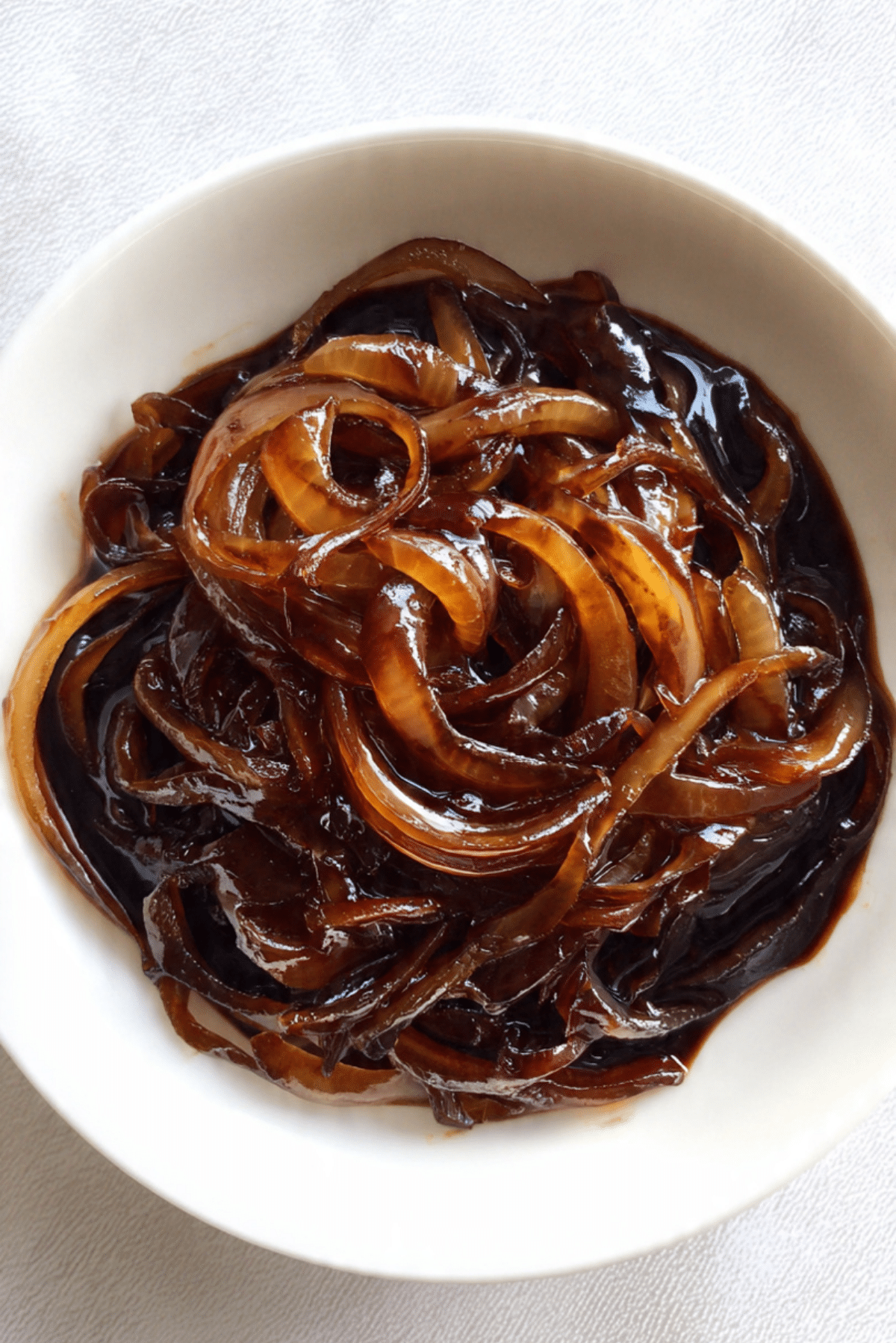
Few ingredients can transform a dish the way caramelized onions do. With just a little time and patience, you turn a simple onion into something deeply sweet, savory, and silky. These golden strands add richness to burgers, pastas, sandwiches, and more. Once you make them from scratch, you’ll never want to go back to store-bought.
Behind the Recipe
Caramelized onions are a kitchen secret every home cook should master. It started for me while making French onion soup one weekend, and I realized that those glossy, jammy onions are magic on their own. I began making them in batches to keep in the fridge. Now they end up on everything—from toast with goat cheese to grilled steaks and even scrambled eggs.
Recipe Origin or Trivia
The method of caramelizing onions has French roots, where chefs would slowly cook onions until their natural sugars develop a deep, complex flavor. It’s a technique based on patience and attention, not fancy ingredients. That’s what makes it special—you’re coaxing out the flavor nature already built in. Add a touch of balsamic vinegar, and you get even more richness and depth.
Why You’ll Love Caramelized Onions
This isn’t just about onions—it’s about unlocking flavor magic with everyday ingredients.
Versatile: Works with sandwiches, burgers, pastas, pizzas, and soups.
Budget-Friendly: Uses one simple onion to create a gourmet topping.
Quick and Easy: Simple process, only a few pantry staples needed.
Customizable: Adjust sweetness and tang to your taste.
Crowd-Pleasing: A perfect addition to almost any meal.
Make-Ahead Friendly: Keeps well in the fridge for days.
Great for Leftovers: Reheat or freeze to enjoy anytime.
Chef’s Pro Tips for Perfect Results
Caramelizing onions takes time but not much effort—just a little care and a few tricks.
- Go low and slow: Keep heat medium-low for even browning without burning.
- Use a wide pan: It helps moisture evaporate and onions cook evenly.
- Stir often: But not constantly—let them sit between stirs to develop color.
- Deglaze with water or vinegar: Helps release stuck bits and adds flavor.
- Don’t rush it: Real caramelization takes 35 to 45 minutes.
Kitchen Tools You’ll Need
You only need a few simple tools to create perfect caramelized onions.
Large Skillet: A stainless steel or cast iron pan works best.
Wooden Spoon or Silicone Spatula: For stirring and scraping the pan.
Sharp Knife: For evenly slicing the onion.
Cutting Board: Keeps your prep area tidy.
Measuring Spoons: To add precise amounts of salt, butter, and vinegar.
Ingredients in Caramelized Onions
These few ingredients work together to create pure gold.
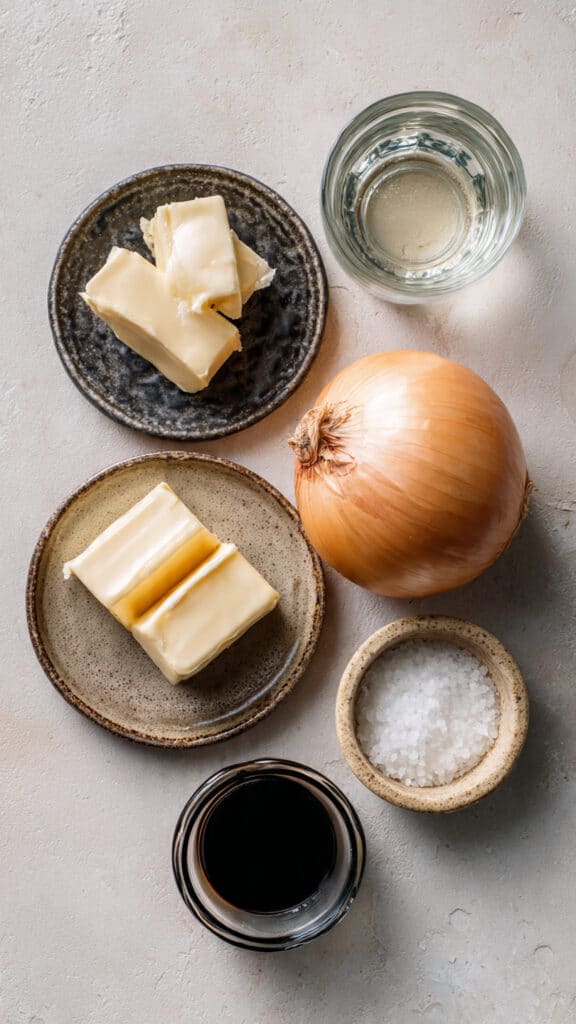
- Unsalted Butter: 2 tablespoons. Adds richness and helps the onions brown beautifully.
- Large Onion: 1 extremely large, peeled and thinly sliced (about 5 cups sliced). The star of the show, bringing sweetness and depth.
- Water: 1/4 cup, used as needed to deglaze and prevent burning.
- Salt: 1/2 teaspoon. Enhances natural sweetness and balances flavors.
- Balsamic Vinegar: 2 tablespoons. Adds tangy sweetness and depth to finish.
Ingredient Substitutions
If you need a few swaps, these will still get you tasty results.
Butter: Olive oil or vegan butter.
Balsamic Vinegar: Red wine vinegar or apple cider vinegar.
White Onion: Yellow or red onions also caramelize beautifully.
Water: A splash of broth for added flavor.
Ingredient Spotlight
Onion: As onions cook, their natural sugars break down and caramelize, turning golden brown and sweet. The type of onion affects the flavor—yellow for balance, red for mild sweetness, white for sharpness.
Balsamic Vinegar: Adds a final layer of complexity, balancing sweetness with acidity and enhancing the deep color.
Instructions for Making Caramelized Onions
Grab a skillet and get ready for slow, delicious magic.
- Preheat Your Equipment:
Set a large skillet over medium heat. Add the butter and let it melt completely. - Combine Ingredients:
Add the sliced onions and sprinkle with salt. Stir well to coat the onions in butter. - Prepare Your Cooking Vessel:
Reduce the heat to medium-low. Spread the onions evenly in the pan so they cook uniformly. - Assemble the Dish:
Cook for 30–45 minutes, stirring every 5 minutes or so. If the onions start to stick or brown too fast, add a splash of water and stir. - Cook to Perfection:
Continue until onions are soft, golden, and jammy. The color should be rich amber and the texture silky. - Finishing Touches:
Stir in balsamic vinegar and cook for 2 more minutes. This deglazes the pan and adds depth. - Serve and Enjoy:
Use warm or cool slightly before storing. Perfect as a topping or a flavor base.
Texture & Flavor Secrets
The beauty of caramelized onions lies in their silky texture and balance of sweet and savory. Slow cooking breaks down their sharpness, leaving soft, jammy ribbons that melt into any dish. The balsamic adds a touch of tang that rounds everything out.
Cooking Tips & Tricks
Keep these tips in mind to master your onions.
- Use a wide pan to avoid steaming.
- If onions brown unevenly, stir more frequently.
- Store leftovers in a glass jar with olive oil to keep them moist.
- Add a pinch of sugar if your onions aren’t naturally sweet.
What to Avoid
Caramelizing onions is simple, but a few mistakes can ruin the batch.
- Cooking too hot—it will burn, not brown.
- Adding vinegar too early—it stops caramelization.
- Crowding the pan—onions need space to cook evenly.
- Walking away too long—they need occasional stirring.
Nutrition Facts
Servings: 4
Calories per serving: 85
Note: These are approximate values.
Preparation Time
Prep Time: 10 minutes
Cook Time: 40 minutes
Total Time: 50 minutes
Make-Ahead and Storage Tips
Caramelized onions are easy to make in advance. Store in an airtight container in the fridge for up to 5 days or freeze for up to 3 months. To reheat, warm gently in a skillet with a touch of butter or oil until glossy again.
How to Serve Caramelized Onions
Use them on burgers, sandwiches, flatbreads, or pizzas. Stir them into mashed potatoes, omelets, or pasta sauces. They even pair beautifully with roasted vegetables or grilled meats.
Creative Leftover Transformations
Leftovers are a flavor goldmine—try these ideas.
- Stir into risotto or soups for a rich base.
- Blend into dips or hummus.
- Spread over toast with goat cheese.
- Add to quiche or savory tarts.
Additional Tips
- Slice onions evenly for consistent cooking.
- Avoid covering the pan—the moisture needs to escape.
- Patience pays off—flavor develops over time.
Make It a Showstopper
Serve caramelized onions in a small rustic bowl, drizzled with extra balsamic glaze and topped with fresh herbs. Their golden color looks stunning next to grilled dishes or cheese boards.
Variations to Try
- Red Wine Onions: Swap vinegar for red wine.
- Herbed Onions: Add fresh thyme or rosemary while cooking.
- Sweet & Spicy: Add a pinch of chili flakes and sugar.
- Garlic Onions: Stir in minced garlic during the last few minutes.
- Vegan Butter Version: Use olive oil for a lighter twist.
FAQ’s
Q1: How long does it take to caramelize onions?
About 35 to 45 minutes over medium-low heat.
Q2: Can I speed up the process?
You can’t rush it without losing flavor—low and slow is key.
Q3: What type of onion is best?
Yellow onions are classic, but any variety works.
Q4: Can I freeze caramelized onions?
Yes, freeze in portions for up to 3 months.
Q5: Why are my onions burning?
The heat is too high—lower it and add a splash of water.
Q6: Can I use oil instead of butter?
Yes, olive oil gives a slightly different but delicious result.
Q7: Do caramelized onions taste sweet?
Yes, their natural sugars develop sweetness as they cook.
Q8: What’s the balsamic vinegar for?
It adds tang and enhances the color and flavor depth.
Q9: How do I know they’re done?
They’ll be golden brown, jammy, and smell sweet.
Q10: Can I use red onions?
Definitely—they’ll give a beautiful deep purple hue and milder sweetness.
Conclusion
Caramelized onions are proof that simple ingredients can create extraordinary flavor. Slow-cooked until sweet, buttery, and rich, they bring warmth and depth to any dish. Make a batch this week, and you’ll find yourself adding them to everything—trust me, it’s worth every minute.
Print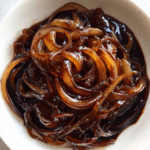
Caramelized Onions
- Prep Time: 10 minutes
- Cook Time: 40 minutes
- Total Time: 50 minutes
- Yield: 4 servings
- Category: Condiment
- Method: Stovetop
- Cuisine: French
- Diet: Vegetarian
Description
These Caramelized Onions are slow-cooked to golden perfection with butter and a splash of balsamic vinegar, creating a rich, sweet, and savory topping perfect for burgers, sandwiches, and more.
Ingredients
- 2 tablespoons unsalted butter
- 1 extremely large onion, peeled and thinly sliced (about 5 cups sliced)
- 1/4 cup water, as needed
- 1/2 teaspoon salt
- 2 tablespoons balsamic vinegar
Instructions
- Melt butter in a large skillet over medium heat.
- Add the sliced onion and sprinkle with salt. Stir to coat the onions evenly in butter.
- Reduce heat to medium-low and cook, stirring every 5 minutes, until onions soften and begin to brown.
- If onions start sticking or browning too quickly, add a splash of water and stir.
- Continue cooking for 35–45 minutes until onions are golden, soft, and jammy.
- Stir in balsamic vinegar and cook for another 2 minutes to deglaze and deepen the flavor.
- Serve immediately or let cool before storing.
Notes
- Use a wide pan to allow even cooking and proper caramelization.
- Be patient—low and slow heat brings out the natural sweetness.
- Store leftovers in the fridge for up to 5 days or freeze for up to 3 months.
Nutrition
- Serving Size: 1/4 cup
- Calories: 85
- Sugar: 5g
- Sodium: 290mg
- Fat: 5g
- Saturated Fat: 3g
- Unsaturated Fat: 2g
- Trans Fat: 0g
- Carbohydrates: 9g
- Fiber: 1g
- Protein: 1g
- Cholesterol: 10mg